
Expressive Arts Therapy in Toronto & Ontario
Sometimes words aren’t the only way to tell your story.
Therapy doesn’t always have to begin with knowing exactly what to say.
Expressive arts therapy creates space to explore your experiences through creativity alongside conversation. Depending on what feels right for you, we might work with visual art, writing, movement, imagery, or other forms of creative expression.
You don’t need to consider yourself an artist or have any creative experience. There’s no pressure to make something beautiful or “get it right.”
It’s about getting curious about what comes up and discovering different ways to express, understand, and connect with your experience.


Maybe words don’t always come easily.
Sometimes you know something is there, but finding the words for it is difficult.
Maybe you spend a lot of time thinking about how you feel but still feel disconnected from the experience itself. Or you’ve gotten very good at explaining what’s happening without necessarily feeling like you’ve had space to explore it.
You might be:
-
finding it difficult to put emotions or experiences into words
-
feeling stuck, overwhelmed, or unsure where to begin in therapy
-
curious about exploring your experiences in a more creative or embodied way
-
someone who naturally connects with art, writing, movement, music, or imagination
-
looking for something different from traditional talk therapy
-
wanting more flexibility in how you communicate and participate in sessions
-
reconnecting with creativity after feeling like there hasn’t been much room for it in your life
You don’t need to relate to everything on this list. You also don’t need to think of yourself as a “creative person” to explore expressive arts therapy.
Sometimes having another way to communicate can give us something new to get curious about.
What Might Expressive Arts Therapy Look Like?
There’s no set formula for an expressive arts therapy session. We might begin by talking about what’s been happening in your life and stay with conversation for most of the session. At another point, something might feel easier to explore through an image, a few written words, movement, sound, or another creative process.
Depending on what feels accessible and meaningful to you, we might explore:
-
Visual art through drawing, painting, colour, collage, or mixed media
-
Creative writing using words, stories, poetry, or journaling
-
Movement and gesture as another way of noticing or expressing an experience
-
Sound, music, or voice when those forms of expression feel useful
-
Imagery and metaphor to explore something that may be difficult to describe directly
-
Different materials or objects as part of the creative process
-
Moving between art forms and noticing what changes or emerges along the way
You’re always invited to have a say in how we work. If something doesn’t feel comfortable, interesting, or accessible to you, you can always say, “No thanks, can we try something else?”
The creative process is there to support the therapy, not to become another thing you have to perform or get right.
What Is Expressive Arts Therapy?
Expressive arts therapy is an approach that uses different forms of creative expression as part of the therapeutic process.
Rather than relying only on conversation, we might explore an experience through visual art, writing, movement, sound, imagery, or other forms of creative expression. Sometimes we may move between different art forms, following what feels interesting or useful in the moment.
The focus isn’t on artistic skill or creating a finished product. You don’t need to know how to draw, paint, write, dance, or make anything “good.”
Instead, the creative process can offer another way to notice, express, and get curious about experiences that may be difficult to capture with words alone.
And sometimes, we’ll simply talk. Expressive arts therapy gives us more options for how we explore what’s happening, rather than prescribing one way you have to participate in therapy.

What We Might Explore Together
People come to expressive arts therapy for all kinds of reasons. You might know exactly what you want support with, or you might simply know that something feels difficult and you’re not sure where to begin. Our work might make space for:
-
Anxiety, stress, and overwhelm, especially when it’s difficult to slow down or make sense of everything you’re carrying
-
Burnout and exhaustion, including the experience of having pushed yourself for too long
-
Neurodivergence, including masking, identity, sensory experiences, and finding ways of navigating life that feel more sustainable
-
Chronic illness and pain, including changes in your body, energy, identity, relationships, and everyday life
-
Grief and loss, including experiences that may be complicated or difficult to put into words
-
Gender and identity exploration, with room for curiosity rather than pressure to arrive at a particular answer
-
Relationships and connection, including patterns, boundaries, communication, and how you experience yourself alongside other people
-
Self-understanding and expression, particularly when you’re trying to connect with parts of yourself that feel difficult to access through words alone
We don’t need to use creativity to explore every experience, and you don’t need to arrive knowing what you want to make or talk about. We can start with what’s present and see where the process takes us.

Expressive Arts Therapy for Children, Teens & Adults
Creativity isn’t just for kids, and there’s no age when you become “too old” to explore something differently.
For Children & Teens
For some young people, sitting face-to-face and talking about what’s going on can feel difficult or simply not very engaging.
Expressive arts therapy offers additional ways to communicate and explore experiences through creativity, imagination, movement, and different materials. Sessions are adapted to the individual child or teen, including their interests, communication style, comfort level, and what feels accessible to them.
For Adults
You don’t have to leave creativity behind when you grow up. Expressive arts therapy can offer adults a different way to slow down, get curious, and explore experiences that may feel difficult to access through conversation alone.
Maybe creativity has always been part of your life. Maybe you haven’t made art since you were a kid. Or maybe the idea of making something feels completely outside your comfort zone.
All of those starting points are welcome. You don’t need to be an artist. You just need permission to explore.
Creativity Is One Part of the Process
Expressive arts therapy gives us more ways to explore what you’re experiencing, but creativity doesn’t have to be the focus of every session. Depending on what you need that day, our work might include conversation, creative exploration, mindfulness, body awareness, or practical skills drawn from DBT-informed practices.
Some sessions may feel very creative. Others might involve mostly talking. We can move between approaches and adjust as we learn more about what feels useful and accessible to you. I don’t expect you to fit yourself into one particular way of doing therapy. My approach is flexible and collaborative, with room for your needs, energy, communication style, and preferences to shape how we work together. There isn’t one right way to participate in therapy.
Creativity has been part of my life for a long time, but I didn’t always know it would become part of my work as a therapist.
When walking from class in art school, I came across a flyer for an information session about art therapy. Something about the idea immediately clicked. I started researching different approaches and eventually found expressive arts therapy.
What drew me to it was the possibility of bringing together two things I cared deeply about: supporting people through the difficult parts of being human and creating space for creativity.
I especially loved that creativity could become something to explore without needing to be productive, polished, or even familiar. So many of us grow up believing art is something you have to be “good at,” or we simply stop making time for it as life gets busier.
That experience continues to shape how I work today. Creativity in therapy isn’t about making something impressive. It can be another way to get curious, communicate, play, notice, and explore what’s happening within and around you.
Why Expressive Arts Therapy?
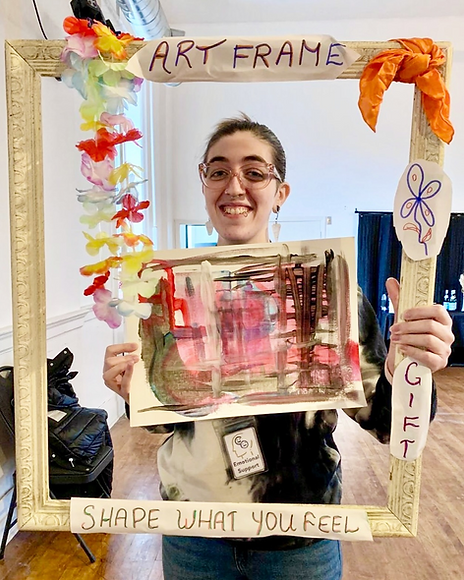
Working With Savannah

I’m Savannah Dasilva, a Registered Psychotherapist (Qualifying) and expressive arts therapist based in Toronto.
My approach is warm, collaborative, creative, and flexible. Alongside expressive arts therapy, I draw from DBT-informed skills, mindfulness, body-based practices, and conversation, adapting our sessions based on what feels useful and accessible to you.
You don’t need to arrive knowing what you want to create or even whether you want to create at all. We can begin with what’s showing up that day and decide together where to go from there.
Frequently Asked Questions
- 01
- 02
- 03
- 04
- 05
- 06
- 07
Curious About Trying Something Different?
You don’t need to know whether expressive arts therapy is the “right” approach for you before reaching out.
We can start with a free consultation to talk about what you’re looking for, answer any questions you have, and see whether my approach feels like a good fit.
You’re welcome to come with curiosity, uncertainty, questions, or absolutely no idea what you’d want to create.
